Analytics · Revenue Insights
Growth Operations & Decision Systems
Connecting campaign activity, reporting, and review into a repeatable growth operating loop.
At a glance
Across the customer journeyHighlighted stages show where this work fits—not measured conversion rates
See the signals
Campaign, provider and website views
Choose the next move
Compare performance and assumptions
Close the loop
Action → review → next test
Reporting built around the next decision
Portfolio tools use demo data; original tracking foundation by Vic
The tools behind the work
Demo walkthroughs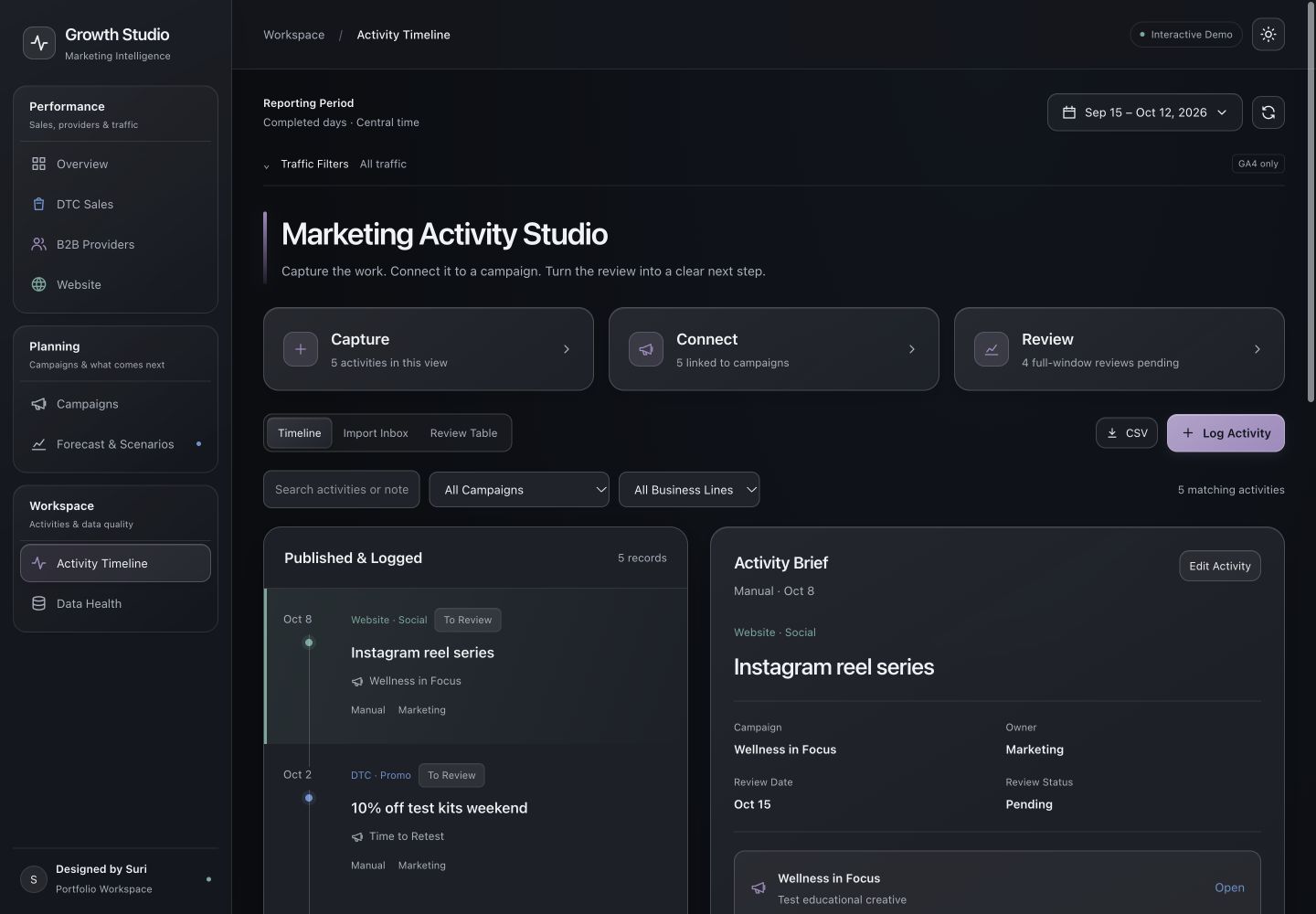
A closer look
Open what interests youThe challenge+
Campaign activity, account requests, and reporting can live in separate places. Collecting data is only a starting point: the team needs to understand what changed, where to act, and what to learn next.
My role+
Defined the decisions the reporting workspace should support and developed planning, filtering, and activity-review enhancements with coding assistance. The work builds on Vic’s original tracking foundation; I do not claim authorship of that foundation or unverified integrations.
The thinking+
Organized the work around a repeatable loop: observe performance, diagnose a gap, choose a response, and review the outcome. The same approach informs structured account briefing and HubSpot lifecycle workflows.
The work+
Developed views across DTC, providers, and the website, along with campaign-linked activity records, review notes, and assumptions-based planning scenarios. Operational work also includes account scoring, follow-up campaigns, and six-month retest reminders. Demonstration imports remain separate from real account data.
The evidence+
The portfolio walkthrough demonstrates filtering, planning, and a campaign-review loop with synthetic data. The business value being addressed is clearer prioritization and a repeatable operating process; no time savings, revenue uplift, or automated attribution is claimed without evidence.
What I learned+
A useful system connects information to the next decision. Standardize the repeated steps, keep assumptions visible, and use feedback from the people doing the work to improve the process.